Form 10-Q is a required quarterly SEC filing that provides updated financial results, risk disclosures, and unaudited financial statements for public companies.
Public companies have the obligation to regularly disclose their financial performance. Investors are not able to wait until year's end for comprehending how a company is doing.
To make sure there is transparency, the U.S. Securities and Exchange Commission (SEC) requires public companies to disclose financial reports at regular intervals during the year.
SEC Form 10-Q is one of the key reports that are needed. This is a quarterly filing that provides updated financial details about how a company operates and performs throughout the year.
In this guide, you will discover the details of SEC Form 10-Q. We’ll explain what it includes and who is required to file it. You will also learn about the deadlines for filing, consequences if not filed correctly or on time and its importance for investors.
The need for filing comes from the Securities Exchange Act of 1934. This law asks companies, which are publicly traded, to reveal their financial information regularly to the public.
Companies must submit a Form 10-Q after each of the first three fiscal quarters:
- After the first quarter
- After the second quarter
- After the third quarter
There is no Form 10-Q for the fourth quarter. Instead, companies file Form 10-K, which is the annual report that includes audited financial statements.
Key Facts About SEC Form 10-Q
- Filed three times per year
- Covers the first three fiscal quarters
- Financial statements are usually unaudited
- Filed 40-45 days after quarter end
- Required under the Securities Exchange Act of 1934
- Available publicly through the SEC EDGAR database
What a Form 10-Q Includes (Key Components)
A typical SEC Form 10-Q filing contains two main parts characterized by the SEC. These sections present financial information for the quarter along with disclosures about risks, legal matters, and other operational developments.
Although the 10-Q is shorter than the annual Form 10-K, it still follows a structured reporting format.
Below are the main sections that appear in most 10-Q filings.
1. Quarterly Financial Statements
The first section of Form 10-Q contains condensed financial statements for the reporting quarter.
This section explains the financial results presented in the report. Instead of just showing numbers, management describes what caused the changes in performance.
Common topics covered in this section include:
- Revenue growth or decline
- Changes in operating expenses
- Profit margins
- Cash flow and liquidity
- Capital expenditures
- Known trends that may affect future performance
3. Market Risk Disclosures
Companies must also disclose their exposure to market risks. These risks typically include:
- Interest rate fluctuations
- Foreign currency exchange movements
- Commodity price changes
- Investment portfolio risks
If these factors could significantly affect financial results, companies must explain the potential impact.
This section helps investors evaluate how external economic conditions may influence the business.
4. Internal Controls and Procedures
Form 10-Q also requires companies to report on internal financial reporting controls. Management must confirm that:
- Proper procedures exist for financial reporting
- Internal controls are functioning effectively
- Any material weaknesses are disclosed
If the company changed its internal control systems during the quarter, those changes must also be reported.
This disclosure improves confidence in the accuracy of the company’s financial reporting.
5. Other Important Disclosures
The second part of a Form 10-Q includes additional information that may affect investors or the company’s operations.
Common disclosures include:
- Legal proceedings
- Unregistered sales of equity securities
- Defaults on debt or senior securities
- Updates to previously disclosed risk factors
These disclosures ensure that investors are aware of events occurring during the quarter that could influence the company’s financial condition.
Detailed Item Structure of Form 10-Q Filing
Like other SEC filings, Form 10-Q follows a structured item format defined by the SEC. The report is organized into two main parts with numbered items.
Below you’ll see a simplified breakdown of the key Items commonly included in a Form 10-Q:
Part I: Financial Information
- Item 1: Financial Statements
- Item 2: Management’s Discussion and Analysis (MD&A)
- Item 3: Quantitative and Qualitative Disclosures About Market Risk
- Item 4: Controls and Procedures
Part II: Other Information
- Item 1: Legal Proceedings
- Item 1A: Risk Factors
- Item 2: Unregistered Sales of Equity Securities and Use of Proceeds
- Item 3: Defaults Upon Senior Securities
- Item 4: Mine Safety Disclosures
- Item 5: Other Information
- Item 6: Exhibits
Why SEC Form 10-Q is Important
Form 10-Q matters because it gives investors a regular look at how a public company is performing during the year.
Instead of waiting for the annual Form 10-K, investors can review a company’s financial position every quarter. This helps them see whether sales, profit, cash flow, debt, and overall operations are getting better or worse.
Some key reasons why Form 10-Q matters include:
- Recent Financial Updates: It gives investors access to the company’s latest quarterly financial statements.
- More Transparency: It helps investors see how the business is performing between annual reports.
- Quarter-to-Quarter Comparison: Investors can compare the latest quarter with previous quarters or with the same quarter from the previous year.
- Early Warning Signs: A 10-Q may reveal issues such as weak cash flow, lower margins, rising debt, or new legal problems.
- Management Insight: The MD&A section explains what caused changes in the company’s financial results during the quarter.
- Better Investment Decisions: Analysts and investors use Form 10-Q to review performance, update forecasts, and compare companies in the same industry.
Real-World Example of a Form 10-Q
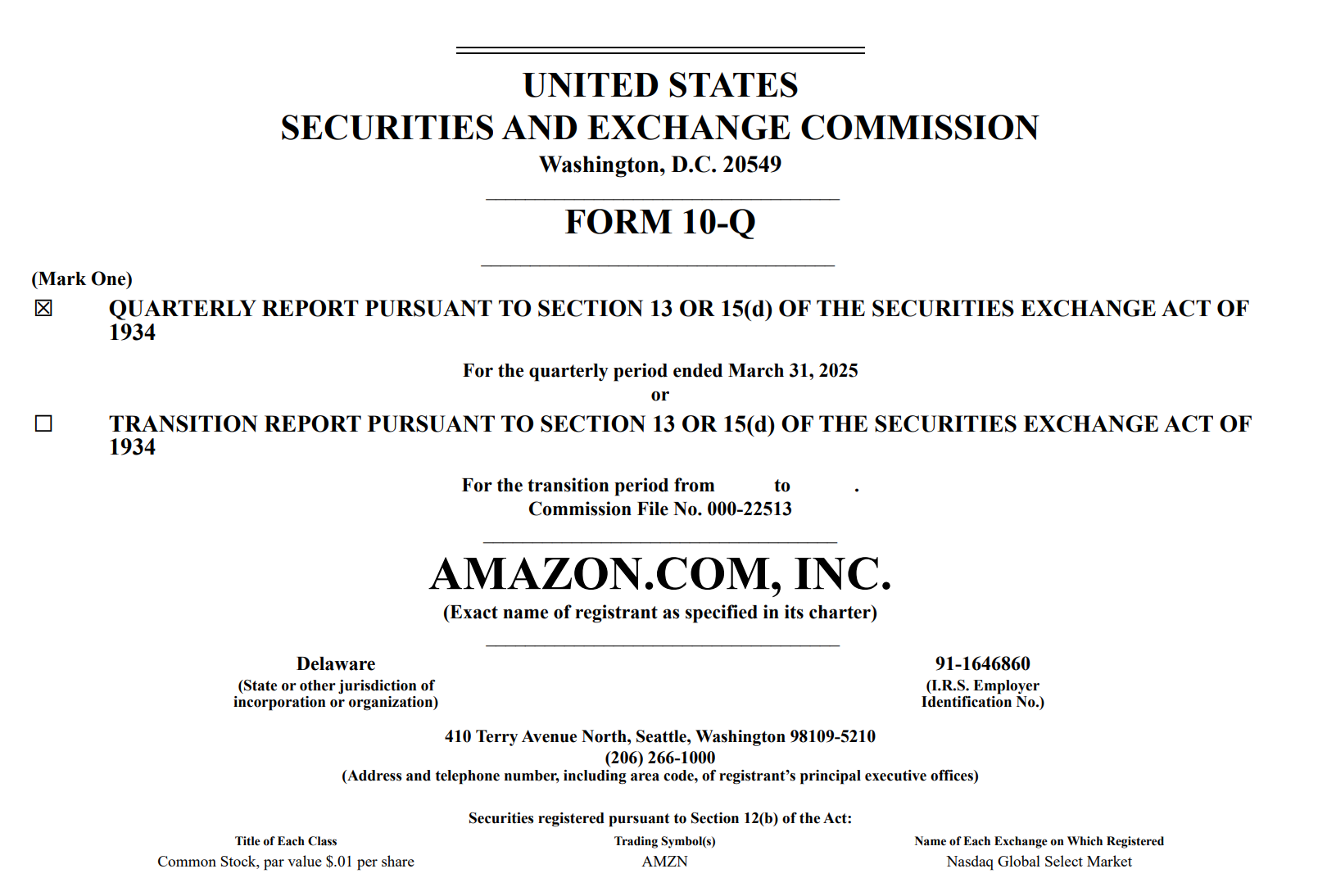
See Amazon’s Form 10-Q for the quarter ended March 31, 2025. In this filing, Amazon reported net sales of $155.7 billion, up from $143.3 billion in the same quarter of 2024. Its net income also increased from $10.4 billion to $17.1 billion.
But the 10-Q shows more than revenue and profit. Amazon also reported that free cash flow fell from $50.1 billion to $25.9 billion, mainly because property and equipment purchases increased
SEC Form 10-Q Filing Deadlines
The due date for submitting Form 10-Q depends on the company’s public float. Public float is the value of shares that are available for trading by the public.
If a company cannot submit Form 10-Q by the time it needs to be submitted, it has to file Form 12b-25. This form is also known as a Notification of Late Filing or Form NT 10-Q.
This form must usually be filed within one business day following the initial deadline. The company must also explain the reason for the delay.
Filing this notice provides:
- A brief explanation of why the report is late.
- An automatic extension of five calendar days to submit the Form 10-Q.
If the company files the delayed report within this extension period, the filing is generally still considered timely under SEC rules.
Companies may miss the deadline for several reasons, such as:
- Mergers or acquisitions in progress
- Corporate restructuring
- Ongoing litigation
- Additional review by auditors
However, if the company fails to submit the report even after the extension, the filing becomes delinquent. This may lead to:
- Regulatory scrutiny by the SEC
- Possible delisting risk from stock exchanges
- Loss of SEC registration
- Reduced investor confidence in the company
For these reasons, public companies place strong emphasis on submitting Form 10-Q filings on time.
How to Access Form 10-Q Filings
Form 10-Q reports are public records. Anyone can access them online.
You can find a company’s SEC Form 10-Q through the following sources:
- SEC EDGAR Database: Search using the company name, ticker symbol, or CIK number.
- Company Investor Relations Website: Most public companies publish their quarterly reports under sections such as “SEC Filings,” or “Financial Reports.”
When the SEC approves the filing, it shows up in the EDGAR database. Here, users have the opportunity to see both present and previous 10-Q reports.
Form 10-Q vs Form 10-K
Form 10-Q and Form 10-K, both these reports public companies submit to the U.S. Securities and Exchange Commission (SEC). The main difference is how often they are filed and how much detail they contain.
A Form 10-Q can also help investors identify warning signs in a company’s financial performance. These red flags do not always mean the company is in serious trouble, but they may require closer review.
Common red flags include:
- Declining revenue compared with previous periods
- Falling gross profit or operating margins
- Weak or negative operating cash flow
- Rising debt or higher interest expenses
- Large increases in inventory
- Increasing accounts receivable
- New or expanding legal proceedings
- Updated risk factors
- Material weaknesses in internal controls
- Late filing of Form 10-Q
- Management warnings about liquidity or going concern issues
Investors usually compare these red flags with earlier filings to see whether the issue is temporary or part of a longer trend.
Bottom Line
By now, you should have a clear understanding of what SEC Form 10-Q is and why it matters.
Form 10-Q is not simply a regular filing. It provides a structured quarterly update about the financial state and operations of a company throughout the year. Because it follows strict SEC reporting rules, it provides reliable information that investors can utilize to monitor performance and identify possible risks.
For anyone analyzing a public company, it is very essential to look at their Form 10-Q filings. This helps in understanding the performance of the business between yearly reports.
Global Corporate Filings API
Quantillium offers an all in one API for corporate filings across global markets. With a reliable SEC Filings API, you can access standardized SEC data, extract full document, track historical coverage, and daily updates from 60 stock exchanges.
Explore the API Docs or Start a free trial to get started.
Frequently Asked Questions
How many times is Form 10-Q filed each year?
Form 10-Q is filed by companies three times every fiscal year. These filings are for the first, second, and third quarters. The fourth quarter is included in the yearly Form 10-K report.
Who must file 10-Q?
All public companies in U.S. that are required to report to the SEC must file Form 10-Q. This is applicable for companies having securities registered under the Securities Exchange Act of 1934.
Is a 10-Q filing audited?
No, normally the financial statements in a Form 10-Q are not audited. But they must still follow accounting standards and are reviewed by the company’s management and auditors.
Is Form 10-Q public?
Yes. Form 10-Q filings are publicly available. Anyone can access them through the SEC’s EDGAR database or via the company’s Investor Relations website.
What are common red flags in a 10-Q?
Common red flags in a 10-Q include falling profit margins, weak cash flow, rising debt, new legal issues, or internal control problems. These may show possible financial or operational risks that need closer review.
Public companies have the obligation to regularly disclose their financial performance. Investors are not able to wait until year's end for comprehending how a company is doing.
To make sure there is transparency, the U.S. Securities and Exchange Commission (SEC) requires public companies to disclose financial reports at regular intervals during the year.
SEC Form 10-Q is one of the key reports that are needed. This is a quarterly filing that provides updated financial details about how a company operates and performs throughout the year.
In this guide, you will discover the details of SEC Form 10-Q. We’ll explain what it includes and who is required to file it. You will also learn about the deadlines for filing, consequences if not filed correctly or on time and its importance for investors.
The need for filing comes from the Securities Exchange Act of 1934. This law asks companies, which are publicly traded, to reveal their financial information regularly to the public.
Companies must submit a Form 10-Q after each of the first three fiscal quarters:
- After the first quarter
- After the second quarter
- After the third quarter
There is no Form 10-Q for the fourth quarter. Instead, companies file Form 10-K, which is the annual report that includes audited financial statements.
Key Facts About SEC Form 10-Q
- Filed three times per year
- Covers the first three fiscal quarters
- Financial statements are usually unaudited
- Filed 40-45 days after quarter end
- Required under the Securities Exchange Act of 1934
- Available publicly through the SEC EDGAR database
What a Form 10-Q Includes (Key Components)
A typical SEC Form 10-Q filing contains two main parts characterized by the SEC. These sections present financial information for the quarter along with disclosures about risks, legal matters, and other operational developments.
Although the 10-Q is shorter than the annual Form 10-K, it still follows a structured reporting format.
Below are the main sections that appear in most 10-Q filings.
1. Quarterly Financial Statements
The first section of Form 10-Q contains condensed financial statements for the reporting quarter.
This section explains the financial results presented in the report. Instead of just showing numbers, management describes what caused the changes in performance.
Common topics covered in this section include:
- Revenue growth or decline
- Changes in operating expenses
- Profit margins
- Cash flow and liquidity
- Capital expenditures
- Known trends that may affect future performance
3. Market Risk Disclosures
Companies must also disclose their exposure to market risks. These risks typically include:
- Interest rate fluctuations
- Foreign currency exchange movements
- Commodity price changes
- Investment portfolio risks
If these factors could significantly affect financial results, companies must explain the potential impact.
This section helps investors evaluate how external economic conditions may influence the business.
4. Internal Controls and Procedures
Form 10-Q also requires companies to report on internal financial reporting controls. Management must confirm that:
- Proper procedures exist for financial reporting
- Internal controls are functioning effectively
- Any material weaknesses are disclosed
If the company changed its internal control systems during the quarter, those changes must also be reported.
This disclosure improves confidence in the accuracy of the company’s financial reporting.
5. Other Important Disclosures
The second part of a Form 10-Q includes additional information that may affect investors or the company’s operations.
Common disclosures include:
- Legal proceedings
- Unregistered sales of equity securities
- Defaults on debt or senior securities
- Updates to previously disclosed risk factors
These disclosures ensure that investors are aware of events occurring during the quarter that could influence the company’s financial condition.
Detailed Item Structure of Form 10-Q Filing
Like other SEC filings, Form 10-Q follows a structured item format defined by the SEC. The report is organized into two main parts with numbered items.
Below you’ll see a simplified breakdown of the key Items commonly included in a Form 10-Q:
Part I: Financial Information
- Item 1: Financial Statements
- Item 2: Management’s Discussion and Analysis (MD&A)
- Item 3: Quantitative and Qualitative Disclosures About Market Risk
- Item 4: Controls and Procedures
Part II: Other Information
- Item 1: Legal Proceedings
- Item 1A: Risk Factors
- Item 2: Unregistered Sales of Equity Securities and Use of Proceeds
- Item 3: Defaults Upon Senior Securities
- Item 4: Mine Safety Disclosures
- Item 5: Other Information
- Item 6: Exhibits
Why SEC Form 10-Q is Important
Form 10-Q matters because it gives investors a regular look at how a public company is performing during the year.
Instead of waiting for the annual Form 10-K, investors can review a company’s financial position every quarter. This helps them see whether sales, profit, cash flow, debt, and overall operations are getting better or worse.
Some key reasons why Form 10-Q matters include:
- Recent Financial Updates: It gives investors access to the company’s latest quarterly financial statements.
- More Transparency: It helps investors see how the business is performing between annual reports.
- Quarter-to-Quarter Comparison: Investors can compare the latest quarter with previous quarters or with the same quarter from the previous year.
- Early Warning Signs: A 10-Q may reveal issues such as weak cash flow, lower margins, rising debt, or new legal problems.
- Management Insight: The MD&A section explains what caused changes in the company’s financial results during the quarter.
- Better Investment Decisions: Analysts and investors use Form 10-Q to review performance, update forecasts, and compare companies in the same industry.
Real-World Example of a Form 10-Q
See Amazon’s Form 10-Q for the quarter ended March 31, 2025. In this filing, Amazon reported net sales of $155.7 billion, up from $143.3 billion in the same quarter of 2024. Its net income also increased from $10.4 billion to $17.1 billion.
But the 10-Q shows more than revenue and profit. Amazon also reported that free cash flow fell from $50.1 billion to $25.9 billion, mainly because property and equipment purchases increased
SEC Form 10-Q Filing Deadlines
The due date for submitting Form 10-Q depends on the company’s public float. Public float is the value of shares that are available for trading by the public.
If a company cannot submit Form 10-Q by the time it needs to be submitted, it has to file Form 12b-25. This form is also known as a Notification of Late Filing or Form NT 10-Q.
This form must usually be filed within one business day following the initial deadline. The company must also explain the reason for the delay.
Filing this notice provides:
- A brief explanation of why the report is late.
- An automatic extension of five calendar days to submit the Form 10-Q.
If the company files the delayed report within this extension period, the filing is generally still considered timely under SEC rules.
Companies may miss the deadline for several reasons, such as:
- Mergers or acquisitions in progress
- Corporate restructuring
- Ongoing litigation
- Additional review by auditors
However, if the company fails to submit the report even after the extension, the filing becomes delinquent. This may lead to:
- Regulatory scrutiny by the SEC
- Possible delisting risk from stock exchanges
- Loss of SEC registration
- Reduced investor confidence in the company
For these reasons, public companies place strong emphasis on submitting Form 10-Q filings on time.
How to Access Form 10-Q Filings
Form 10-Q reports are public records. Anyone can access them online.
You can find a company’s SEC Form 10-Q through the following sources:
- SEC EDGAR Database: Search using the company name, ticker symbol, or CIK number.
- Company Investor Relations Website: Most public companies publish their quarterly reports under sections such as “SEC Filings,” or “Financial Reports.”
When the SEC approves the filing, it shows up in the EDGAR database. Here, users have the opportunity to see both present and previous 10-Q reports.
Form 10-Q vs Form 10-K
Form 10-Q and Form 10-K, both these reports public companies submit to the U.S. Securities and Exchange Commission (SEC). The main difference is how often they are filed and how much detail they contain.
A Form 10-Q can also help investors identify warning signs in a company’s financial performance. These red flags do not always mean the company is in serious trouble, but they may require closer review.
Common red flags include:
- Declining revenue compared with previous periods
- Falling gross profit or operating margins
- Weak or negative operating cash flow
- Rising debt or higher interest expenses
- Large increases in inventory
- Increasing accounts receivable
- New or expanding legal proceedings
- Updated risk factors
- Material weaknesses in internal controls
- Late filing of Form 10-Q
- Management warnings about liquidity or going concern issues
Investors usually compare these red flags with earlier filings to see whether the issue is temporary or part of a longer trend.
Bottom Line
By now, you should have a clear understanding of what SEC Form 10-Q is and why it matters.
Form 10-Q is not simply a regular filing. It provides a structured quarterly update about the financial state and operations of a company throughout the year. Because it follows strict SEC reporting rules, it provides reliable information that investors can utilize to monitor performance and identify possible risks.
For anyone analyzing a public company, it is very essential to look at their Form 10-Q filings. This helps in understanding the performance of the business between yearly reports.
Global Corporate Filings API
Quantillium offers an all in one API for corporate filings across global markets. With a reliable SEC Filings API, you can access standardized SEC data, extract full document, track historical coverage, and daily updates from 60 stock exchanges.
Explore the API Docs or Start a free trial to get started.
Frequently Asked Questions
How many times is Form 10-Q filed each year?
Form 10-Q is filed by companies three times every fiscal year. These filings are for the first, second, and third quarters. The fourth quarter is included in the yearly Form 10-K report.
Who must file 10-Q?
All public companies in U.S. that are required to report to the SEC must file Form 10-Q. This is applicable for companies having securities registered under the Securities Exchange Act of 1934.
Is a 10-Q filing audited?
No, normally the financial statements in a Form 10-Q are not audited. But they must still follow accounting standards and are reviewed by the company’s management and auditors.
Is Form 10-Q public?
Yes. Form 10-Q filings are publicly available. Anyone can access them through the SEC’s EDGAR database or via the company’s Investor Relations website.
What are common red flags in a 10-Q?
Common red flags in a 10-Q include falling profit margins, weak cash flow, rising debt, new legal issues, or internal control problems. These may show possible financial or operational risks that need closer review.
Related Articles
September 24, 2026
•
8 Min
What is SEC Form N-PX? Filing Rules & Investor Guide
SEC Form N-PX is an annual proxy voting report filed by covered funds and institutional managers. Learn who files it, what it shows, and key deadlines.

.webp)

.webp)